

Murders of Karlov Manor brought us the last card where Teysa is still alive: Teysa, Opulent Oligarch. In the story of Murders, it was Teysa herself who was murdered, in her own Karlov Manor. A bit on the nose, no? Fret not, though, by the end of the story, Teysa comes back as a spirit, as seen in the card Call a Surprise Witness, and continues to lead the Orzhov Syndicate to this day.
Teysa, Opulent Oligarch is an incredibly fun Orzhov commander with a twist on the typical gain/drain strategy of many Orzhov commanders. While she doesn’t care about lifegain, she does care about your opponents losing life on your turn, rewarding you with Clues for making it happen. Further, once per turn, cracking a Clue in any way will get you a 1/1 flying Spirit.
Teysa generates so many Clues that you’ve nearly always got options for card draw. Combined with a high land count and interaction, the deck very consistently meets its game plan. Additionally, there are a boatload of cards that care about creating and losing tokens as well as a number of ways to bolster a flying army, and they all work together harmoniously in this deck to deliver consistently fun, effective gameplay.
Teysa, Opulent Oligarch
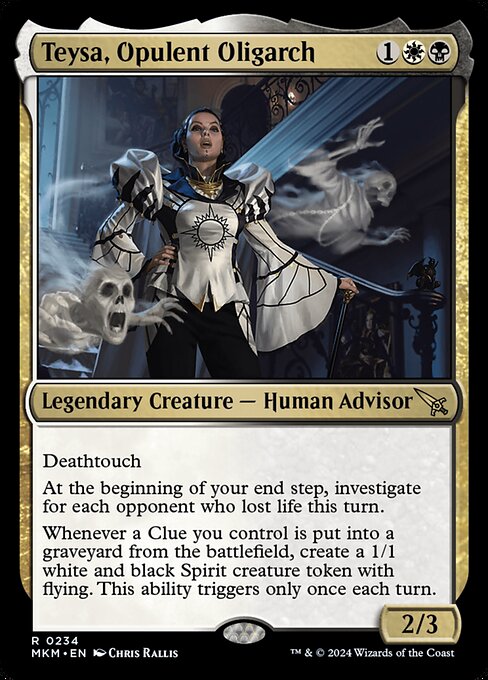
Teysa is a 2/3 Human Advisor with Deathtouch for 

 – the fact that she’s a human advisor, not a spirit advisor, is what lets us know she’s still alive at this point in the story. She comes with two triggered abilities.
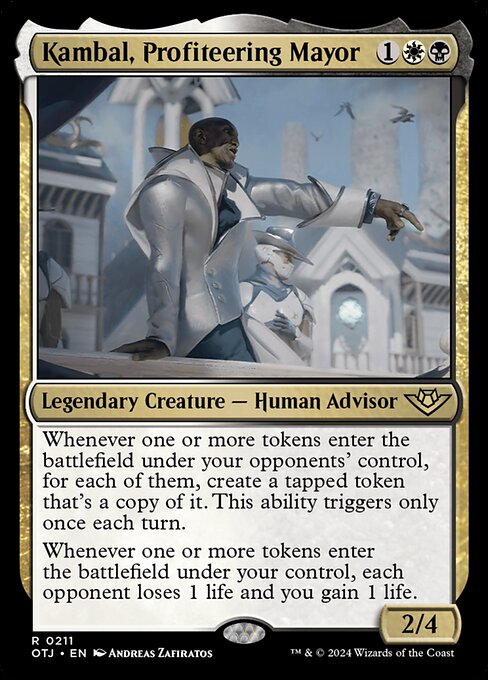
At the beginning of your end step, investigate for each opponent who lost life this turn. It’s important to note that you technically get each Clue token from this trigger one Clue at a time, and not all Clues at once – this is relevant for some cards like Kambal, Profiteering Mayor which trigger on “one or more tokens you control enter.” If you investigate 3 times with Teysa, Kambal will also trigger 3 times, not just once.
Her second triggered ability reads, Whenever a Clue you control is put into a graveyard from the battlefield, create a 1/1 white and black Spirit creature token with flying. This ability triggers only once each turn. Note that you don’t need to sacrifice the Clue using its own ability to get the Spirit – sacrificing or destroying it in some other way, like to Bartolomé del Presidio, is just as good.
Core Gameplay for Teysa, Opulent Oligarch
In a 4-player game, successfully making each opponent lose life on your turn yields you 3 Clues. You have 4 turns per turn cycle (including yours), giving you the choice on every player’s turn whether to spend 2 mana to crack a Clue or to hold the mana for interaction. Cracking a Clue builds your Spirit army as well as your hand, but sometimes dealing with a problem is the better investment. This type of gameplay makes the deck feel like a distant cousin of a blue draw-go deck. I particularly like using 2-mana interaction where possible, to keep the mana you’re trying to spend each turn consistent.


Since the deck is dealing heavily with creating and sacrificing Clue tokens, as well as generating a flying token Spirit army, there are so many synergistic cards we can run to turbocharge numerous aspects of this deck. There are lots of cards that drain opponents when tokens are created or leave play, and there are tons of cards that provide support to token armies. Utilizing a mix of these helps us realize our win condition: drain and damage each opponent to 0 life.
Recovery and Consistency
I run 40 lands in this deck. Combined with the card draw from Clues, this deck recovers from board wipes better than many other decks. Consistently making land drops and keeping your hand full lets you restart from even a Farewell fairly easily, and the interaction lets you deal with problems if someone else pulls too far ahead.
Early Game: Drain Setup
This deck wants Teysa out generating Clues as soon as possible. Since the only fast mana we run is Sol Ring, this means Teysa is almost always coming out turn 3. Ideally, on turn 1 or 2, we play a drainer so we end turn 3 with 3 Clues.
Attack Drainers
There are a number of black creatures that drain each opponent for 1 life when they attack. Aside from Sanguine Syphoner, they all cost . These are great early game but you shouldn’t rely on them lasting more than a couple of attacks. On turn 3 you can usually find an opponent who can’t or won’t block and kill your creature, but as the game goes on, that creature is likely to die in combat. Not to worry – by that time, you should have plenty of alternate options for drain, or have amassed enough Spirits to cause life loss via combat damage.
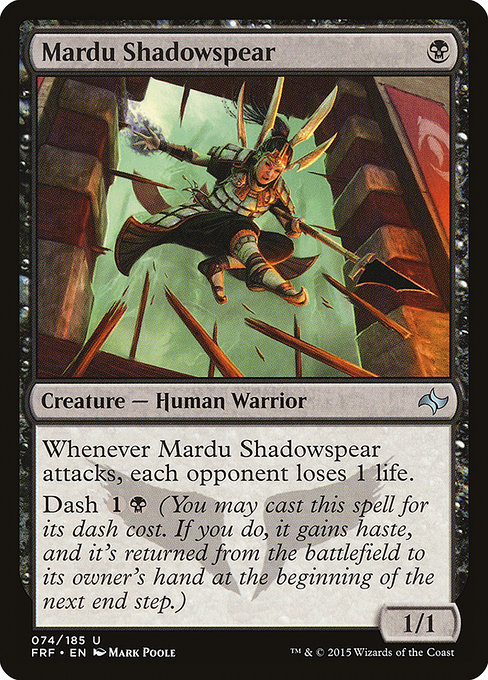
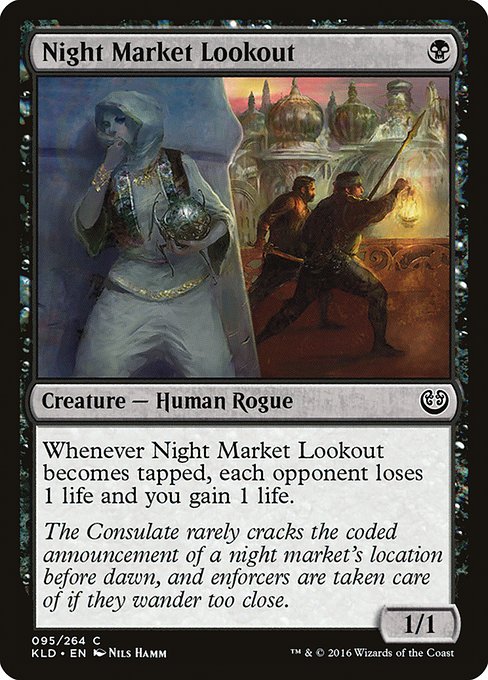
These creatures include Mardu Shadowspear, which can be Dashed in for to drain the turn he comes out; Night Market Lookout, which will typically trigger itself by attacking, but could be used by Springleaf Drum to drain safely; Pulse Tracker; Thornbow Archer, which only works on non-Elf decks; Vicious Conquistador; and the aforementioned Sanguine Syphoner.

Do note that if you get sick of this deck, all of these can be directly slotted into a Belbe, Corrupted Observer deck for a different kind of devious shenanigans.
Early Game Non-Combat Drainers
These options come down before Teysa and enable her turn 3, but continue to enable her turn after turn without risking being lost in combat.
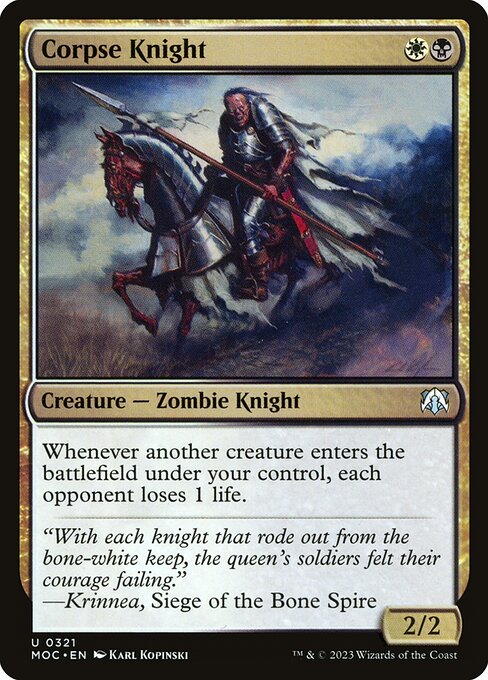
Corpse Knight drains for 1 whenever another creature you control enters. This is relevant turn 3 because Teysa will trigger him, but this will remain incredibly potent the rest of the game as well when you’re creating one Spirit per turn. Corpse Knight can dish out some serious damage. Note that if Corpse Knight is your only drainer in the mid game, you may need to crack a Clue for a Spirit on your own turn in order to trigger Teysa for 3 more Clues.
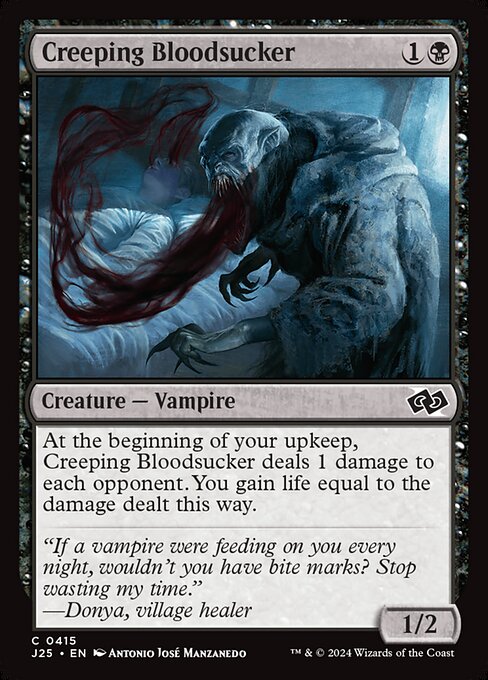
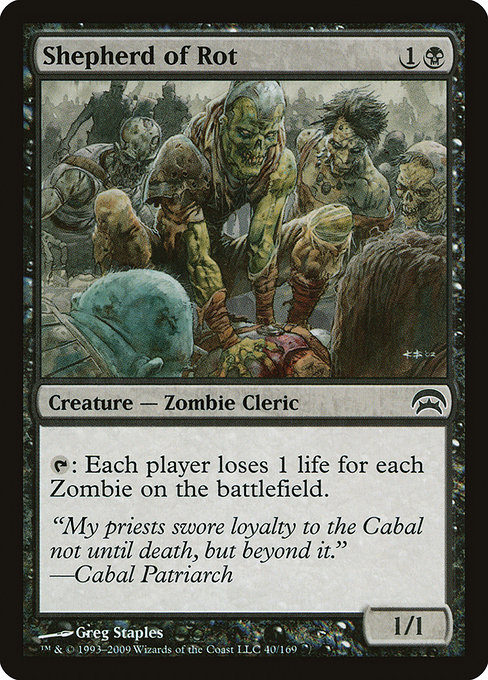
Creeping Bloodsucker, Shepherd of Rot and Sanctum of Stone Fangs all guarantee 1 drain per turn – note the Shepherd drains you too and does care about ALL zombies on the field, not just yours, potentially making him a significant source of life loss for the table.
Teysa Secret Tech: Clue Cracking Acceleration
6 mana every turn cycle to crack 3 Clues is an ambitious goal. And if you need to spend mana interacting, good luck. However, there is some secret tech that makes cracking 3 Clues a cycle very attainable. Also note that while you’re likely generating 3 Clues a turn, it won’t be until the midgame where spending 6 mana is even an option, meaning you’ll ideally have a Clue surplus and could be cracking 4 Clues a cycle for 8 mana.
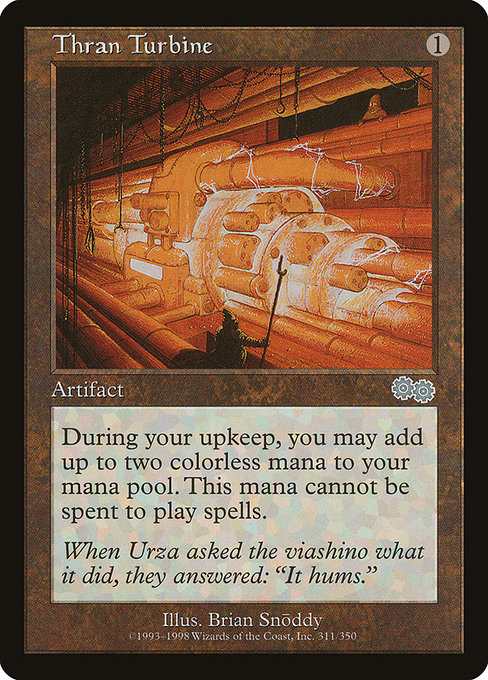
First up is Thran Turbine – a 1-mana artifact that gives you 2 colorless mana to spend on your upkeep, with the caveat that you can’t use that mana to cast spells. No problem – 2 mana is exactly what we need to crack a Clue. This card basically translates to one free extra card and Spirit on your upkeep. Love it!
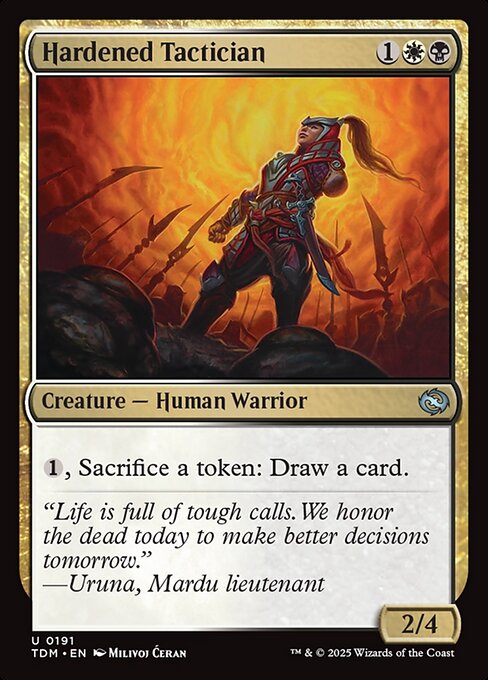
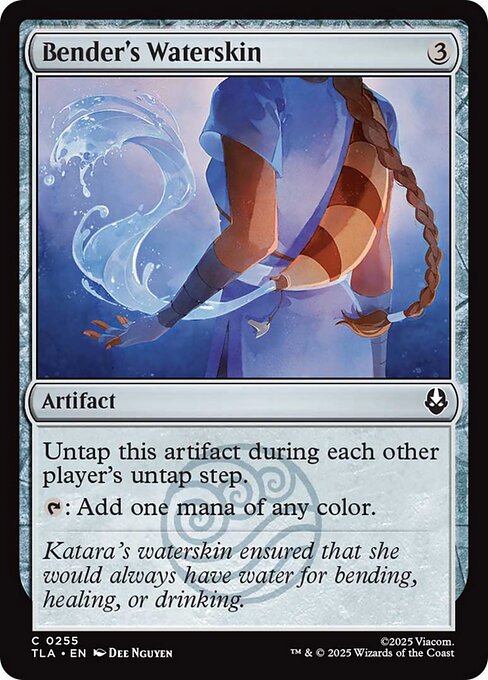
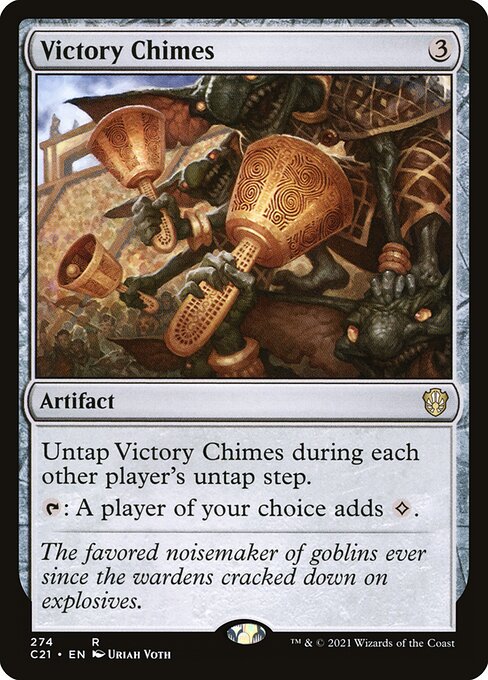
Getting Hardened Tactician, Bender’s Waterskin, or Victory Chimes on the field effectively reduces the cost to crack one Clue per turn to instead of  .
.
Tactician lets you sacrifice any token for and draw a card – obviously this works for Clues, but can also work for your Spirits in a pinch. There’s no once-per-turn limitation on this ability, letting you continue to crack Clues or other tokens for if you need to dig.
Bender’s Waterskin and Victory Chimes untap themselves on each opponent’s untap step, so using them to crack Clues each turn means you only need to come up with one additional mana on those turns for the Clues.
My favorite part about this – if you get 2 of the 3 above out on the field, cracking 1 Clue a turn becomes effectively free!
Teysa Midgame: Building an Army and Increasing Drain
Drain Allstar
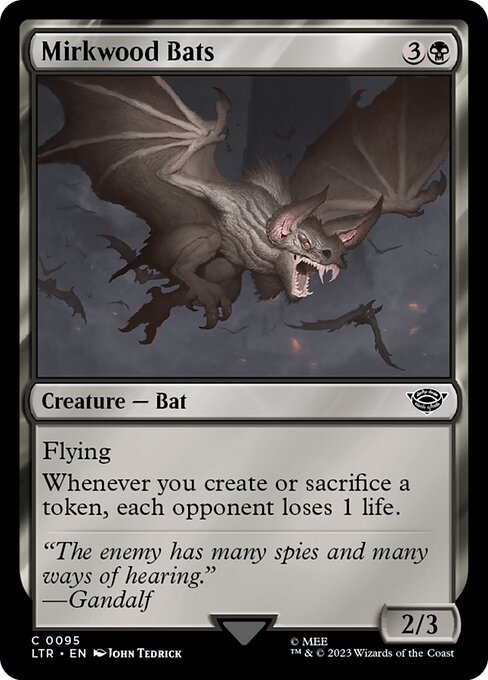
Mirkwood Bats really is in a league of its own in this deck. The Bats trigger whenever you create or sacrifice tokens. Sacrificing a Clue to get a Spirit is two drain triggers. Getting 3 Clues on the end step is 3 drain triggers. We also run a couple of synergistic mass-sacrifice outlets in the deck, meaning it’s possible to sacrifice our Spirit army for the Bats or other drain-on-exit creatures to trigger. These include Plumb the Forbidden, Bartolomé del Presidio, Martyr’s Cause and Teysa, Orzhov Scion.
Teysa, Orzhov Scion is particularly incredible with Mirkwood Bats. Sacrifice 3 black and white Spirits to Teysa, create 3 white Spirits, which you can also sacrifice to Teysa. The combined drain would be 9 and you’d get to exile 2 creatures!
Drain on Entry
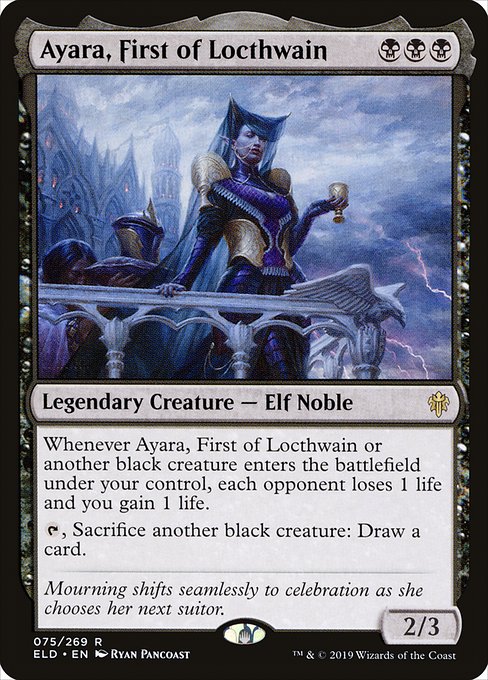
Ayara, First of Locthwain drains when she or other black creatures enter, and she generates you life to boot. Teysa’s Spirits are black and white, so they drain on entry.
Kambal, Profiteering Mayor drains when your tokens enter, but he triggers when “one or more tokens enter the battlefield under your control,” so mass-token creation from something like Thalisse, Reverent Medium would only drain for 1. But like we mentioned previously, Teysa investigating 3 times will trigger Kambal 3 times. Combine this with the Spirits you’re creating plus Kambal’s token-tithe effect, Kambal could be draining for ~7 or more in a turn cycle.
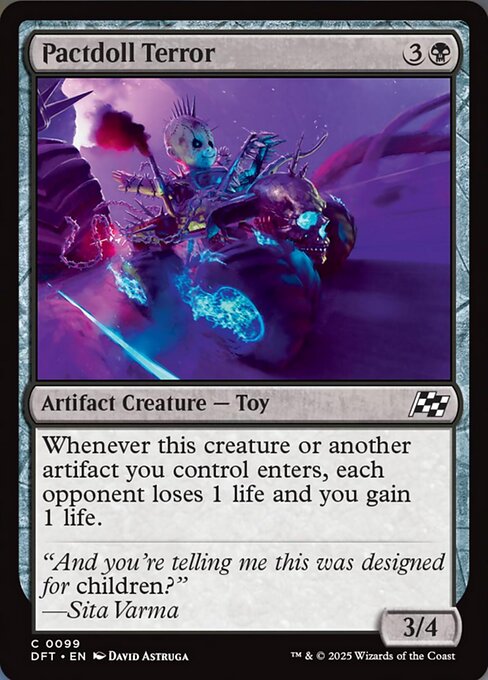
Pactdoll Terror cares specifically about itself and artifacts entering, draining usually for 3 on your end step. We do run a decent number of artifacts though, so it could trigger additional times. The fact that it triggers itself can help you generate some Clues mid-game after a wipe.
Drain on Exit
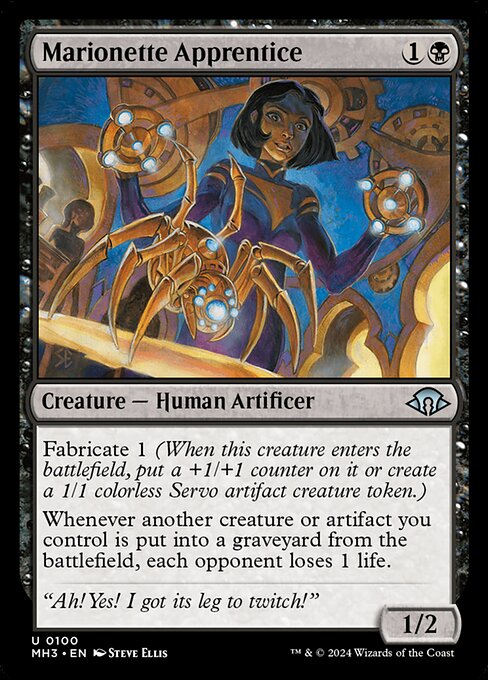
Marionette Apprentice drains whenever your creatures or artifacts hit the graveyard. Kind of like Corpse Knight, you may need to crack a Clue on your own turn to have Teysa generate more Clues if the Apprentice is your only drainer.
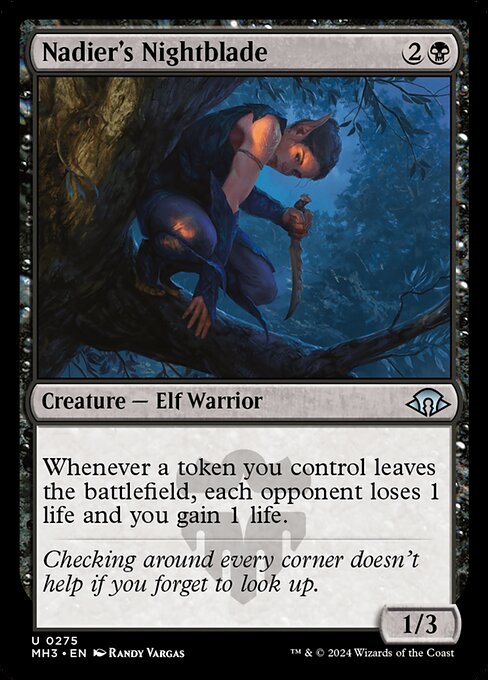
Nadier’s Nightblade cares specifically about tokens leaving the battlefield to drain. Since it’s a leaves the battlefield trigger, even exile effects like Farewell would cause the Nightblade to have numerous triggers.
Both of these are really great board wipe deterrents, as blowing up your Spirit army and/or Clues will cost the table a chunk of life.
Bolstering the Spirits

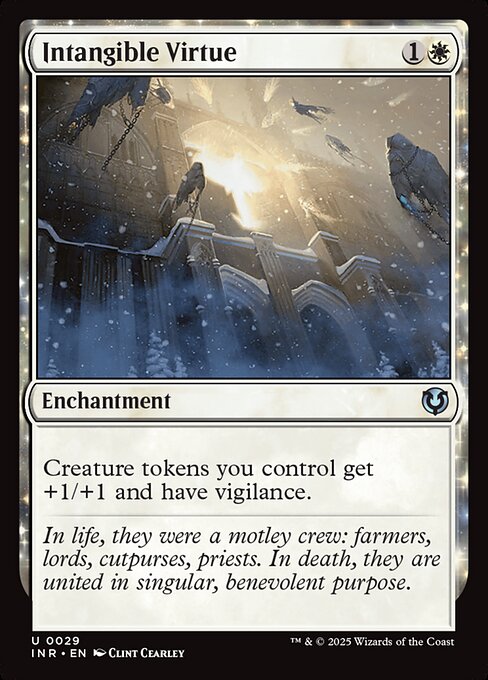
Patchwork Banner is a mana rock that gives your Spirits +1/+1 and Intangible Virtue gives your creature tokens +1/+1 and vigilance, letting you attack and defend simultaneously.
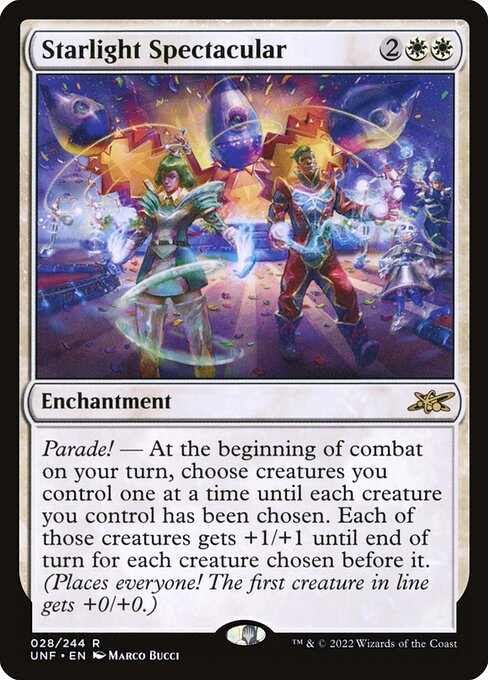
Starlight Spectacular is possibly the strongest win condition in the deck – it just adds so much power on board for your evasive fliers. This single card turns your drain-’em-out strategy to destroy-them-in-combat immediately. With 6 creatures on board, you get 0+1+2+3+4+5=15 extra power for an attack, and it just gets stronger the more creatures you have. 7 creatures adds 21 power, 8 creatures 28 power, etc.
Increasing Token Generation
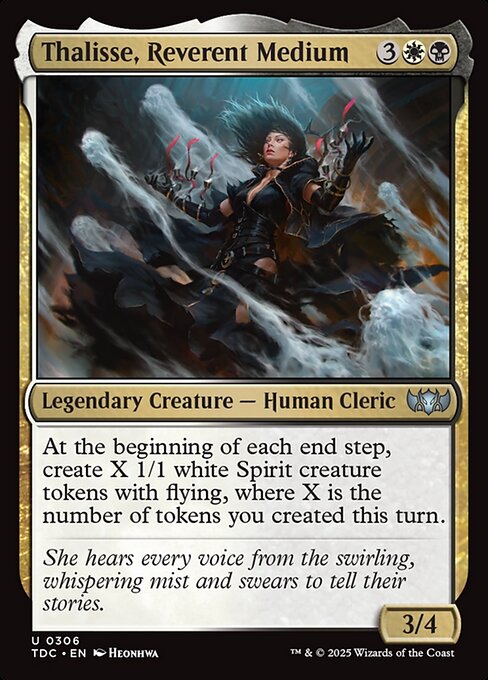
Thalisse, Reverent Medium generates you 1/1 white flying Spirits each end step equal to the number of tokens you’ve created that turn. On your own turn, if you’ve generated 3 Clues and 1 black and white Spirit, she generates you 4 additional Spirits. On each opponent’s turn that you crack a Clue and get a Spirit? She gives you another one. Just make sure to resolve her end step trigger after Teysa’s so she sees the Clues come in.
At 5 mana she’s a bit of an investment, and effectively gets in the way of cracking 3 Clues. Conversely, she definitely accelerates your Spirit generation. For me, I’m constantly on the fence for whether to include her or not, since she typically delays my game plan by one full turn in order to spend the mana to cast her. Casting her early typically draws out a board wipe that erases your progress, so I prefer to cast her mid-game after someone wipes for another reason to accelerate recovery.
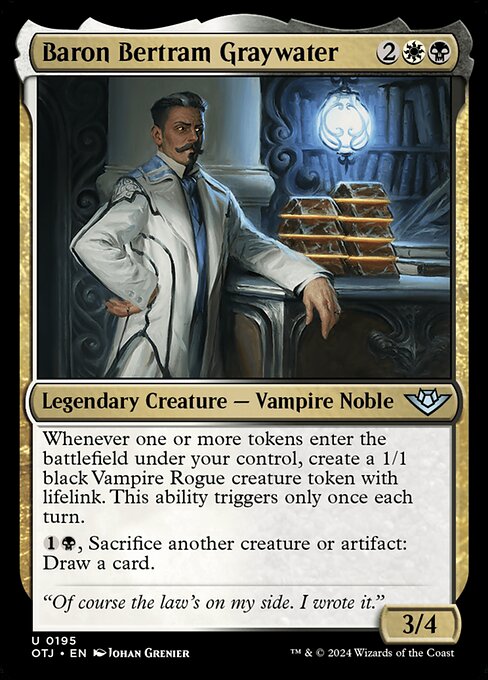
Baron Bertram Graywater isn’t quite as strong as Thalisse but comes for 4 mana. The Baron gets you 1/1 Vampire Rogues with Lifelink once per turn when you generate a token. He can also sacrifice a creature or artifact for to draw a card – though honestly, I have never activated that ability in this deck.
The Usefulness of Insurance
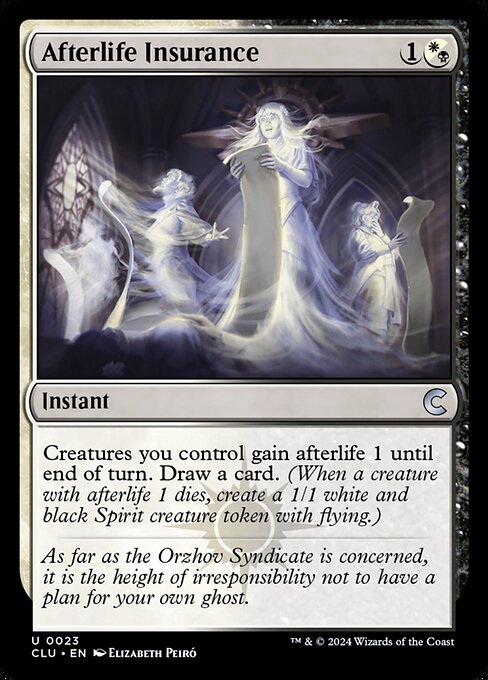
Afterlife Insurance is spectacular both offensively and defensively.
Offensively, if you’re loaded up on Spirits and are set up to drain on creature tokens entering/exiting, you can cast this card and mass-sac your spirits to get a brand new army and a boatload of triggers.
Defensively, use it as board wipe insurance – it’s the magical 2-mana casting cost! If someone throws out a board wipe, all of your creatures will create a 1/1 white and black Spirit creature token with flying on death.
The fact that this spell replaces itself by drawing you a card is just gravy.
Teysa Secret Tech: Turning Tokens into Drainers

Mirrormind Crown allows you to convert the first batch of tokens you create into token copies of whatever the Crown is equipped to. Unfortunately, the same rule that allows Kambal, Profiteering Mayor to trigger 3 times from Teysa’s Investigations prevents us from turning all 3 of Teysa’s end step Clues into 3 copies of something else – we only get 1.
Still though, imagine creating a new Corpse Knight or Pactdoll Terror or Mirkwood Bats each turn instead of a Spirit. The compounding drain ends games quick!
Teysa Secret Tech: Weaponizing Clues
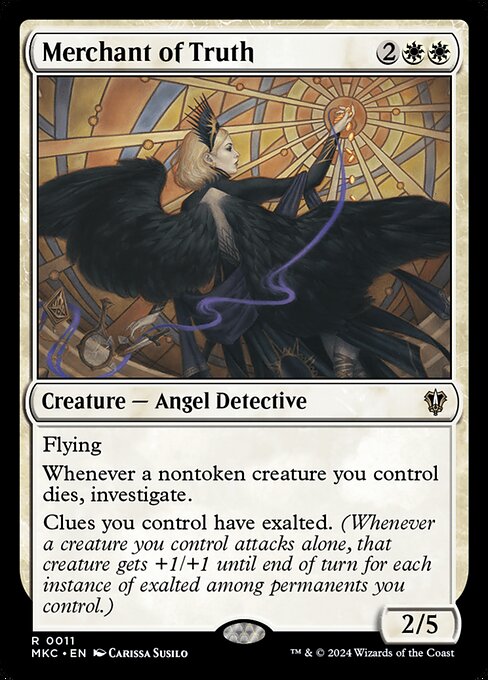
Merchant of Truth stays in my hand until a board wipe is cast. Then she comes out, ready to turn all of my stockpiled Clues into buffs. Each Clue has Exalted – whenever a creature you control attacks alone, they get +1/+1 for each instance of Exalted on permanents you control.
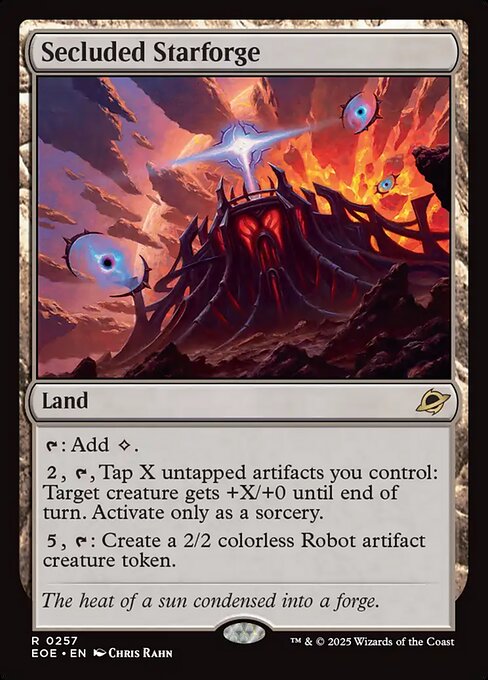
Secluded Starforge lets you tap your Clues and some mana to provide a pretty significant power buff to a single creature. You do need to activate it as a sorcery, so you’ll need to rely on Flying as evasion to get the damage through. Note you can still crack a tapped Clue!
Naturally, Merchant of Truth and Secluded Starforge work beautifully together. A stockpile of 8 Clues could promote a single 1/1 Spirit into a 17/9 grim reaper.
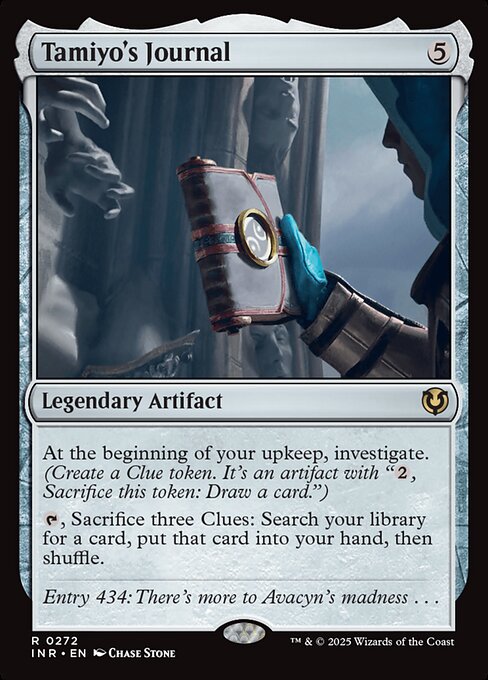
Lastly, Tamiyo’s Journal gets you one Clue on your upkeeps and can sacrifice 3 Clues to find any card in your library. For me, it’s typically removal I desperately need, or it’s Starlight Spectacular to start closing the game out.
Teysa Wins: Critical Mass of Drain and Spirits, Backed Up by Interaction
Teysa’s endgame strategy is an extension of the midgame. You fill your board with enough drainers, you swing with your Spirits, you keep your hand full with Clues, and you use interaction to deal with problematic permanents.
The beauty of this is, aside from Starlight Spectacular, there is no single card in this deck that is clearly the problem, which makes spot removal against you difficult to evaluate. Further, spot removal against you slows you down a bit, but you have plenty of redundancy and options in the deck to continue your plan. As covered earlier, even full board wipes like Farewell hurt you less than most other decks – the high land count and the innate ability of keeping your hand full as part of your game plan lets you recover quicker than most decks.
Example Critical Mass Drain

You’ve got Ayara, First of Locthwain, Nadier’s Nightblade out and you’ve amassed an army of 6 Spirits.
On your turn, crack a Clue, get a Spirit, drain for 2 (1 from Ayara and 1 from Nadier’s Nightblade).
On each opponent’s turn, crack a Clue, draining for 2 per turn. Total drain: 8. You’ve also drawn 4 cards.
On your turn, you cast Marionette Apprentice. You have 10 Spirits now, you attack with them to bring life totals lower. Crack a Clue on your turn, draining for 3. Total drain: 11, plus the damage dealt by your Spirits.
On each opponent’s turn, crack a Clue for a Spirit, draining 3 each time, for an additional 9. Total drain: 20, and you’ve drawn 8 cards and have 14 Spirits.
At the opportune moment, cast Plumb the Forbidden, sacrificing your 14 Spirits, the Apprentice’s servo, Ayara, the Nightblade and Teysa. Nadier’s Nightblade sees 15 tokens leave, draining for 15 and gaining you 15. Marionette Apprentice sees 18 creatures die, draining for an additional 18. Total drain: 53, 33 of which is from this turn.
If somehow you didn’t win, you just drew 19 additional cards (at the cost of 19 life, most of which Nightblade gave back) on top of the 8 you got from your clues!
Another Example
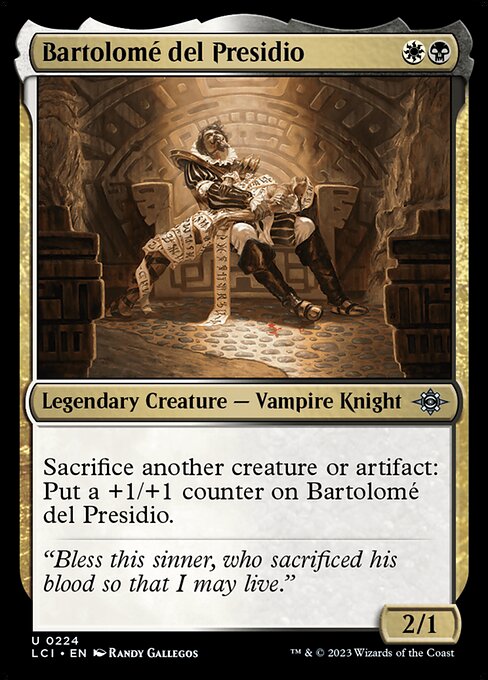
You’ve got Mirkwood Bats and Bartolomé del Presidio out. You have 6 Spirits and 5 Clues.
Sacrifice a Clue to Bartolomé, triggering Teysa to create a Spirit. Bats sees both, drains for 2. You have 7 Spirits.
You cast Afterlife Insurance.
You sacrifice the 7 Spirits and the 4 Clues to Bartolomé, causing the Bats to drain for 11 when the tokens leave and another 7 when Insurance Spirits enter. Sacrifice those 7 Spirits as well. Total drain: 27 life.
And you’ve got a massive Vampire Knight!
If you had a Nadier’s Nightblade or Corpse Knight or another drainer out, the damage would be further amplified.
Attack with Spirits: Every Bit of Damage Matters
During the midgame, you should be consistently attacking with your Spirits. You typically don’t need to leave them up as chump blockers – you have a decent amount of passive lifegain and you can generate a new Spirit on demand once a turn anyways. So keep the Spirits sideways to continue to pressure life totals.
Anthems help here, and as previously mentioned, Starlight Spectacular very easily overwhelms the table with combat damage.
Teysa Secret Tech: Westvale Abbey & Ormendahl, Profane Prince

 0
0
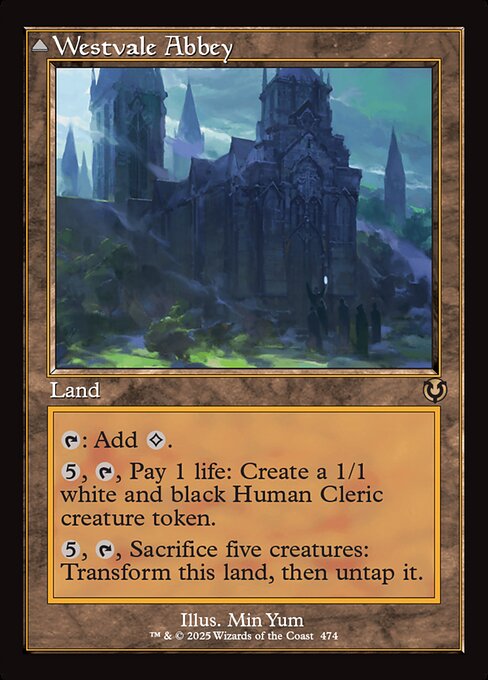
I’ve tried to play this card in so many decks, but only Teysa has been able to use it on occasion. You’ve seen how instant-speed mass sacrifice effects can be used effectively in this deck. Westvale Abbey provides another way to do this:  ,
,  , Sacrifice 5 creatures: Transform this land into Ormendahl, Profane Prince.
The prince is a formidable beater himself, a 9/7 flying, lifelink, indestructible, haste Demon. Very fun to activate and play, even if the setup is quite cumbersome.
Plus, the Abbey is a mana sink to create creature tokens too, useful if you’re flooding after a board wipe.
Teysa, Opulent Oligarch’s Interaction Package
2-mana instant-speed interaction is the sweet spot for this deck, allowing you to make the call to use that interaction or to crack a Clue. A number of these are modal or cover a few bases. Here are some of the highlights.
2-mana Spot Removal
Fracture and Vanishing Verse are fairly flexible, allowing you to hit specific types of permanents.
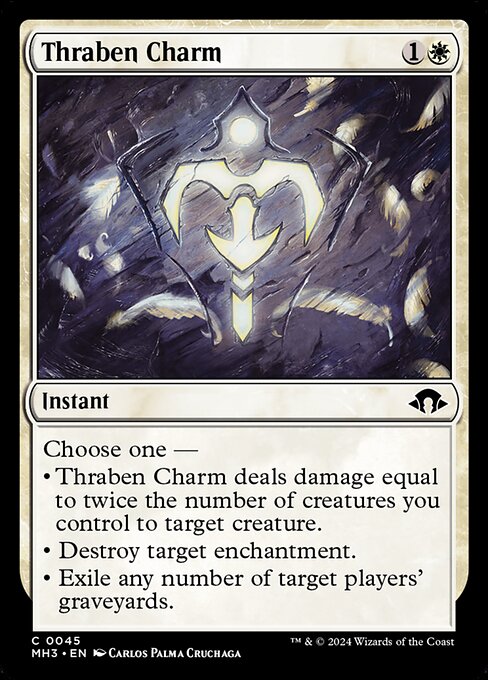
Thraben Charm is a personal favorite of mine, giving you a modal spell with three options.
The first deals damage equal to twice the number of creatures you control to target creature. With your Spirit army, this deals with most creatures: 6 Spirits and Teysa is 14 damage to a creature.
The second allows you to destroy an enchantment. Bye-bye, Rhystic Study!
Lastly, exile any number of target players’ graveyards. Graveyard-based reanimation strategies are very explosive and can end the game on the spot (just ask my Old Rutstein self-mill reanimator deck); so having instant-speed graveyard hate can save your life.
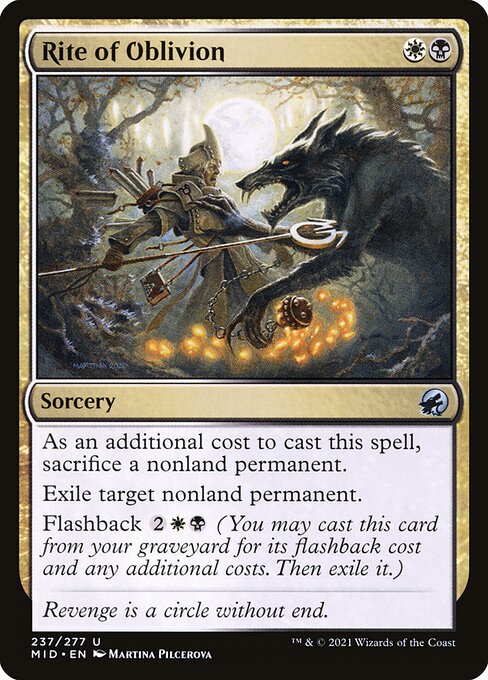
Rite of Oblivion is unfortunately a sorcery, but because you sacrifice a permanent to cast it, you can sacrifice a Clue on your turn. This yields you a Spirit from Teysa, but you lose out on the card. You get to exile any non-land permanent, so this card has come in handy more than once. You can also flash it back for to hit a second problem permanent.
2-mana Fogs & Protection
A few fogs here and there never hurt anyone. Right?
An army of small chump blockers helps keep you alive in most cases, but occasionally a massive beater with trample or someone’s more impressive go-wide army is coming your way, threatening your life. Fogs can buy you the time to deal with it.
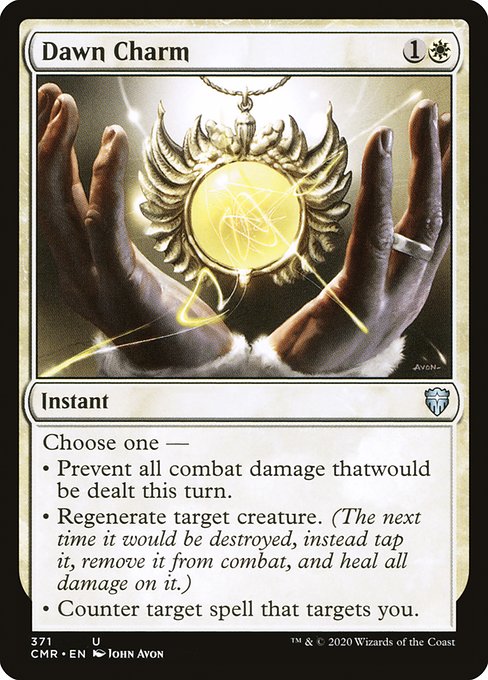
Dawn Charm is a modal spell with three options: Prevent all combat damage this turn, regenerate target creature, and counter a spell that targets you. The first two modes tend to be the most useful. Regenerating Teysa during a destroy-based board wipe that doesn’t prevent regeneration frees up a lot of mana next turn since you don’t need to re-cast her.
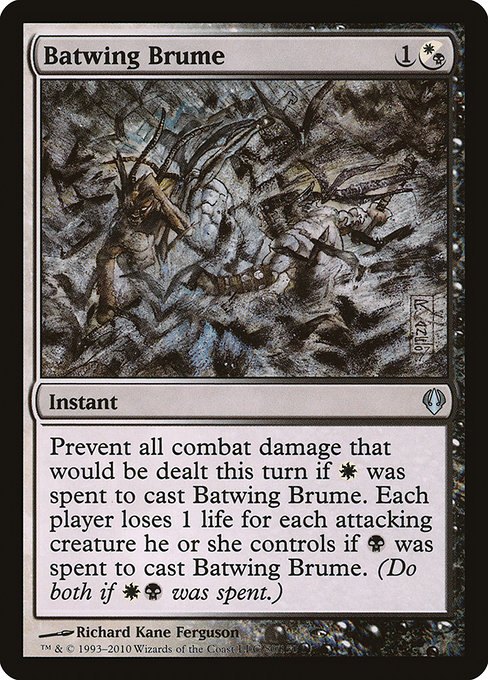
Batwing Brume is also a fog, but if you cast it with it also can drain the attacker for 1 per attacking creature. It’s kind of like Inkshield-at-home, but it’s also 2 mana instead of 5.
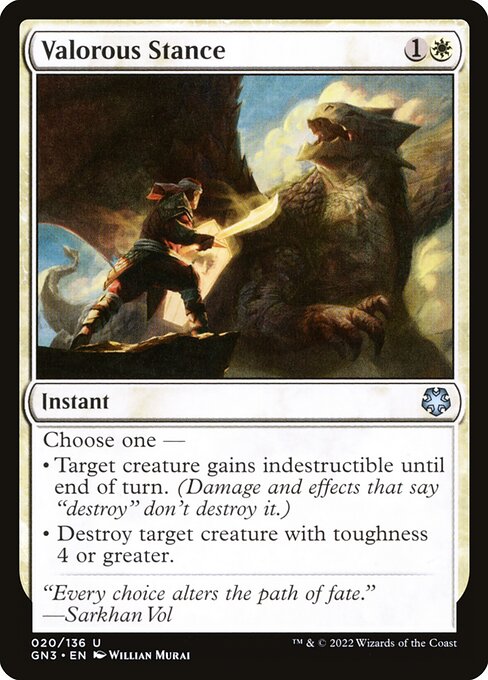
Valorous Stance is a modal spell that protects a creature or removes a creature with toughness 4 or greater.
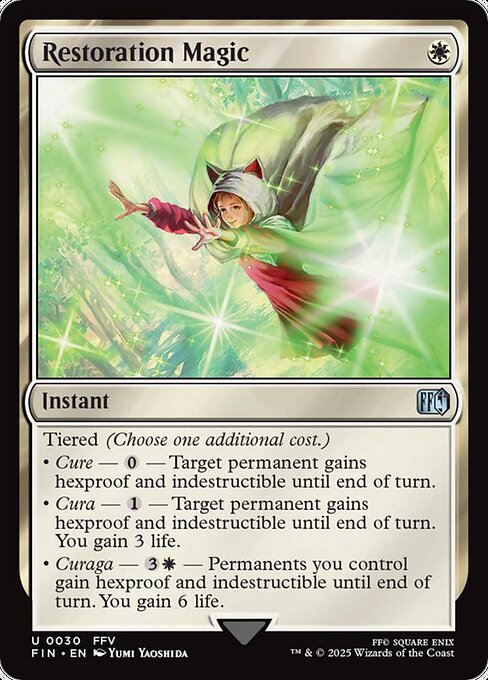
While technically 1 mana, I run Restoration Magic over its other 1-mana counterparts like Loran’s Escape because you can pour additional mana into it for additional effects, fitting the 2-mana model better. Plus, pour 3 into this spell and you save your whole board from most interaction.
2-mana Insurance Policies
Afterlife Insurance is so great in this deck. I’ve talked about it a few times already, but to reiterate: you can use it offensively with drain effects and a sacrifice outlet to create a second set of creatures to enter and die; you can use it defensively to maintain a board in response to a wipe; it’s 2 mana, and it replaces itself. Superb!
Plumb the Forbidden is very similar to Afterlife Insurance in its ability to be used offensively or defensively, exchanging your board for cards and functioning as an instant-speed sacrifice outlet for any number of creatures for 2 mana.
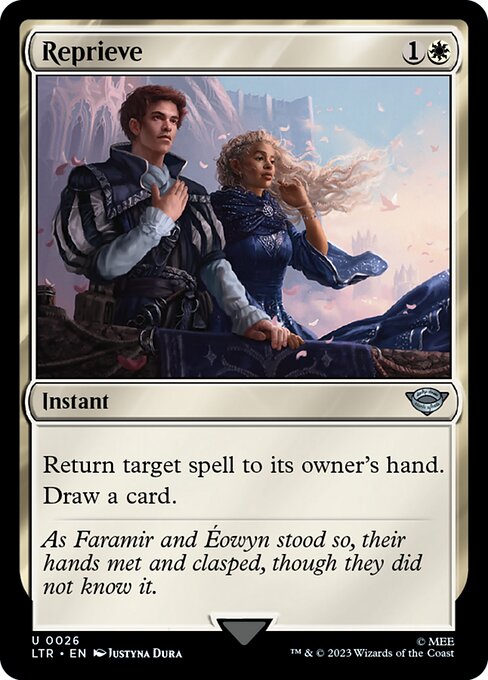
Reprieve temporarily stalls an opponent from doing something impactful. Maybe you want to have one more turn before they board wipe, or perhaps they just tapped out for a game-winning combo. Send that spell back to their hand, you get to draw a card, and now you know who Public Enemy #1 is.
I did pull a Bilbo’s Gambit, which is very similar to Reprieve – I highlighted it as one of the best cards from the Hobbit, so I’ll likely be slotting it into the deck soon.
Other Instant Interaction
Not all quality interaction is 2 mana, sometimes you need to branch out into the classics.


Swords to Plowshares, Path to Exile, Generous Gift are all classic white removal staples. Generous Gift is an auto-include in almost any deck I can run it in, as it just deals with any permanent, including lands. I have Stroke of Midnight as well but I still consider Generous Gift before even Swords or Path.

Kaya’s Guile is very flexible instant-speed interaction. You get to pick 2 of the 4 modes, or all 4 if you pay an extra  to entwine them all.
Each opponent sacrifices a creature. Useful against Voltron strategies with untargetable permanents.
Exile all cards from each opponent’s graveyard. Like Thraben Charm, instant graveyard hate comes in handy frequently.
Create a 1/1 white and black Spirit creature token with flying. Sometimes, you need an extra blocker.
You gain 4 life. I’ve had people do the math to send enough attackers at me to kill me, allowing me to cast this before damage to gain enough life back to live another day. Call an ambulance…. but not for me!
Mortify hits creatures or enchantments. Flexible, unconditional, useful.

Scavenger Grounds is also instant-speed graveyard hate, though it effectively costs you 3 mana to activate.
Teysa’s Board Wipes
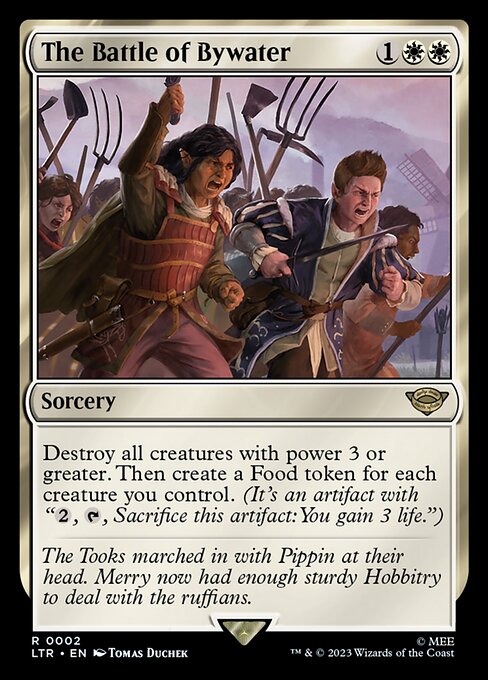

The Battle of Bywater is a potentially one-sided board wipe, destroying all creatures with power 3 or greater. Very few creatures in this deck have power 3 or greater at base value, so this typically destroys your opponent’s problematic creatures. Plus, you get a bunch of Food tokens, which triggers the creatures that care about tokens, can be used with Secluded Starforge or just to pad your life total.
Austere Command is an oldie but a goodie – flexible modal symmetrical board wipe. What are the biggest issues? Get rid of ’em.
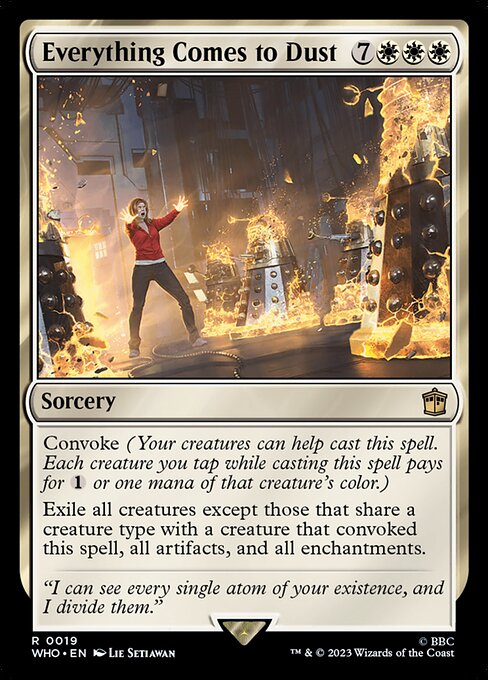
Everything Comes to Dust is the nuclear option. It always exiles all artifacts and enchantments – this includes your Clues, notably – but you can selectively decide which creatures get exiled. It has Convoke, so you can tap your creatures to help pay for it, and then the creature types used to convoke it are safe from exile.
Teysa Secret Tech: Martyr’s Cause
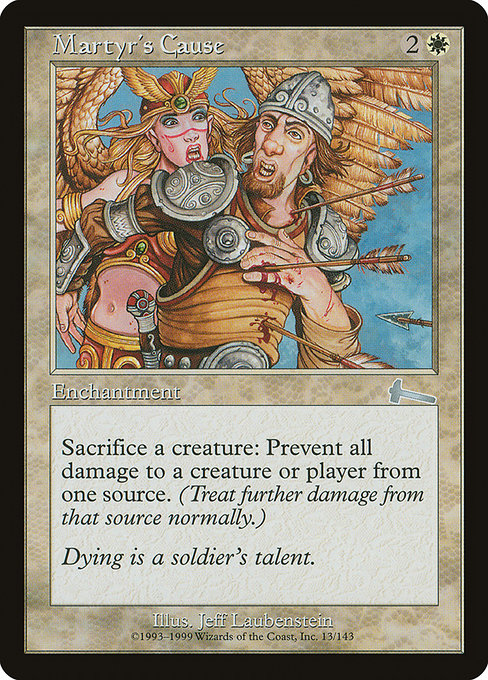
Martyr’s Cause presents a real problem for your spellslinger and go-tall trample opponents. Someone just cast Crackle with Power targeting you for 60 damage? Sac a Spirit, choose Crackle, target yourself. Jumbo Cactuar suited up with a Rancor? Sac a Spirit, choose the Cactuar, target yourself. Boom, problem solved.
This can be extremely potent and soft lock your opponents from damaging you until they find removal. It also serves as a free mass sacrifice outlet for you in the right situations.
Find this type of effect useful and want some redundancy? Try its slightly-more-fair version: Circle of Despair.
Teysa, Opulent Oligarch’s Land Base
In earlier versions of the deck, I ran very few mana rocks aside from Sol Ring and Thran Turbine. I figured with 40 lands and cracking Clues, I’d be drawing so many cards, I would consistently make land drops into the late game and steadily grow my mana base.
In practice, you don’t start cracking Clues until maybe turn 4, and even then you typically are using turns 4 and 5 for some additional setup and cracking maybe one Clue a cycle. This means you can miss land drops, which slows you down considerably.
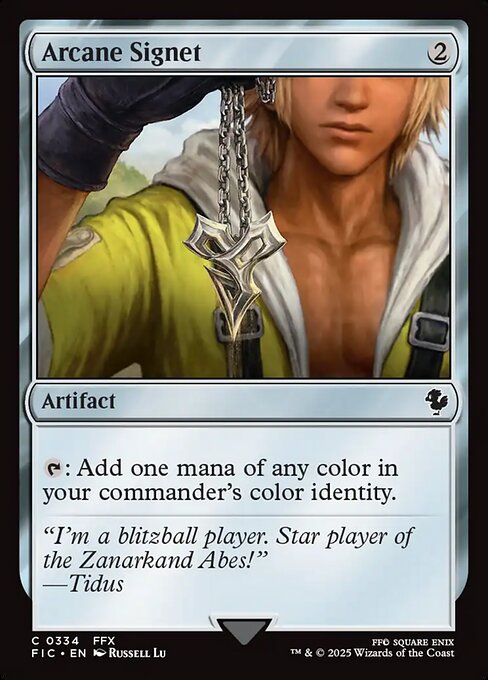
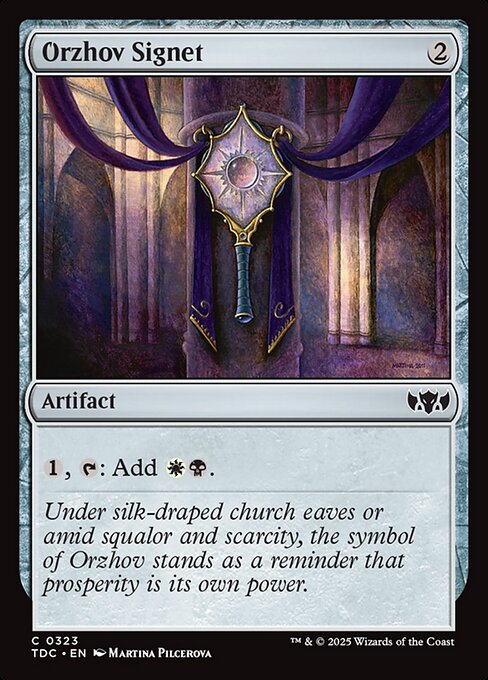

Adding in 8 or so mana rocks into the deck helped accelerate the setup phase and got you into Clue crackin’ phase more smoothly, which in turn helped make consistent land drops. This includes the classics like Orzhov Signet and Talisman of Hierarchy, along with the utility rocks previously mentioned like Bender’s Waterskin and Patchwork Banner. Thought vessel to remove my hand size limit.
I still run 40 lands.
The actual landbase is straightforward – I follow my own dual lands guide for budget untapped dual land includes and run a decent chunk of basics.
For utility lands, I included Bojuka Bog and Scavenger Grounds for graveyard hate and Leechridden Swamp as a drainer in a pinch.
Temple of the False God is genuinely good in a deck with this many lands, as it’s almost always online when you play it, and taps for enough to crack a Clue.
We discussed the benefits of Secluded Starforge – making use of Clues as a creature buff – and Westvale Abbey – eating Spirits to summon a Demon. They also help against flooding – they serve as mana dumps to create artifact or white/black creatures tokens, which can synergize with the deck’s drainers as well.
Ash Barrens, Terramorphic Expanse and Evolving Wilds are included for budget mana fixing.
It would make sense to add something like Arcane Lighthouse in this deck to ensure you can target pesky hexproof or shroud creatures if your budget permits.
Teysa, Opulent Oligarch Decklist





End Step
She may not have survived Karlov Manor, but Teysa, Opulent Oligarch is still one of the most rewarding Orzhov commanders I’ve built. Every turn gives you a real decision: crack a Clue or hold up interaction. Every Spirit you make gets you closer to a win, whether that’s a pile of drain triggers or a Starlight Spectacular swing. Between the 40 lands, the Clue draw and the 2-mana interaction, the deck recovers from almost anything the table throws at it, and it rarely feels like you’re doing nothing on someone else’s turn.
If you’ve been looking for an Orzhov deck that isn’t just another lifegain pile, give her a try!
Have you built Teysa? What’s your favorite Clue-cracking trick, or is there a drainer I missed that belongs in the 99? Let me know in the comments!